Strains Resistance: Kan
Culture Medium : YPD
Condition : 30℃, under aerobic conditions
Storage at : -80℃
AH109 Yeast Strains Genotype: MATa, trp1-901, leu2-3, 112, ura3-52, his3-200, gal4Δ, gal80Δ, LYS2::GAL1UAS-GAL1TATA-HIS3, MEL1 GAL2UAS- GAL2TATA-ADE2, URA3::MEL1UAS-MEL1TATA-lacZ
AH109 Yeast Strains Description:
AH109 is a Saccharomyces cerevisiae strain, belonging to eukaryotic cells. Generally, antibiotics for prokaryotes such as kana and ampicin are not effective for yeast. Therefore, in order to prevent the contamination of yeast culture strains by E.coli and other prokaryotes, some ampicillin and kanamycin antibiotics will be added to the medium to inhibit the contamination and growth of bacteria.
The suitable growth temperature of Saccharomyces cerevisiae is 28-30 degrees, and it is generally cultured at 30 degrees. If the temperature exceeds 32 degrees, cell death may be caused.
AH109 Saccharomyces cerevisiae is mainly used in yeast two hybrid system, and it is used together with Y187 strain to study the interaction between protein and protein.
AH109 Saccharomyces cerevisiae was originated from pj69-2a strain, and contained ade2 and his3 screening markers (James et al., 1996).Mel1 is an endogenous gal 4 response gene. LacZ reporter gene was introduced into pj69-2a, and AH109 (a.holtz, unpublished) was constructed. His3, ade2 and mel1/lacz reporter genes were three complete hospital response promoter elements Gal4, GAL1, Gal2 and MEL1, respectively.
When making AH109 Saccharomyces cerevisiae glycerin, please do not use the flat plate for more than 4 days to keep, try to use fresh plate.
Yeast two hybrid system is a very convenient tool for studying protein interaction in vivo. It is commonly used as a kind of double hybridization system based on Gal4. The yeast transcription factor Gal4 is used to detect the protein interaction after transcription activation. The working principle is: a complete yeast transcription factor Gal4 is composed of two separate and functional independent domains. The N-terminal has a 147 amino acids DNA binding domain (DNA BD), and the C-terminal has a transcription activation domain (AD) composed of 113 amino acids. DB can recognize and combine the upstream activation sequence (UAS), while ad can activate the downstream genes of UAS for transcription, The single BD or ad can not activate gene transcription. Normally, BD and ad will not be combined. The protein to be tested will be fused with BD and ad respectively to form bait-dna and prey DNA. Only when bait and trap protein interact, it will promote the interaction between BD and ad, and form a complete Gal4, which can activate the transcription of the reporting gene.
AH109 is a kind of experimental strain for yeast double hybridization in Gal4 system, which is derived from p69-2a yeast strain. It is introduced lacZ reporter gene to produce AH109. AH109 is Mata type, which can directly convert plasmid or with mat α The protein interaction of A-type yeast strain Y187 was verified by binding or screened and constructed by double hybridization library. AH109-gal4 yeast two hybrid system needs two plasmids, pgbkt7 and pgadt7. The former was Trp, which was used to express the fusion protein of DNA BD and bait protein, while the latter was Leu, which was used to express the fusion protein of AD and prey. AH109 has four reporter genes: lacZ, HS3, ade2, MEL1, which are regulated by three completely heterogenous ga/4 reaction starting elements-61, G2 and M1. Only 17bp core regions identified by Gal4 are the same, and the rest are different. This feature effectively reduces the probability of false positive. Because any trap protein binding alone causes false positive, it is necessary to identify three different sequences and activate four reporter gene expression.
Suggested Culture Methods:
Method 1:
1. under the condition of 30 ℃, oxygen and glucose as carbon source, the wild Saccharomyces cerevisiae grew very well. When yeast is cultured in vitro, the culture medium should be shaken gently after inoculating the yeast storage solution so that the cell can be dispersed evenly.
2. when it is used as a large-scale liquid culture, yeast grows better in a conical flask. It is more favorable for yeast to increase oxygen intake in a flask with a partition plate at the bottom of the bottle.
3. it is important to ensure that all glassware is free of any surfactant when cultivating yeast. The culture medium should not exceed 1/5 of the total volume of the flask, and be cultured in a 300 r/min, 30 ℃ constant temperature shaker.
4. for the small amount of DNA and RNA preparation, yeast can be cultured in glass or plastic tube, and a third volume of medium is added into the test tube, and fixed on the shaking table, and vibrated at 350 r/min.
Method 2:
1. yeast is grown on the plate by scribing or coating with a ring.
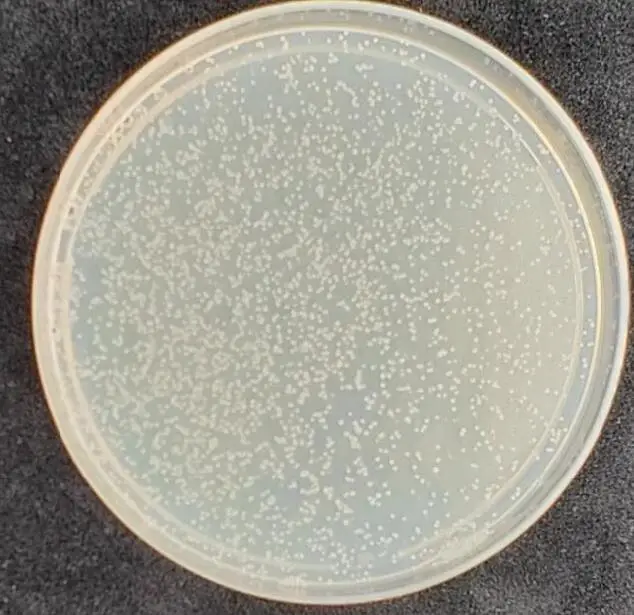
2. if the dilution solution of wild haploid yeast is coated on the surface of YPD plate and cultured at 30 ℃, then a single colony can be seen after 24 hours, but if the colony or photocopying plate is to be selected, it needs to be cultured for more than 48 hours.
3. the time to cultivate yeast should be twice as long as the time of using the saved component medium.
Notes:
This product is FOR RESEARCH USE ONLY!
This product is glycerol packed, Please kindly culture it as soon as possible then harvest and store at -80℃.
Shipping temperature is 2-8℃.